
The Story of Alison Redmond-Bate
As the Conversion Practices Bill raises fears of a chill on debate, the case of Alison Redmond-Bate shows why free speech must protect views that others find offensive
Free speech is already on a knife edge in the UK. The Conversion Practices Bill is set to completely silence TERFs. When a crucial issue concerning free speech arises, I reach for the case of Alison Redmond-Bate v Director of Public Prosecutions.
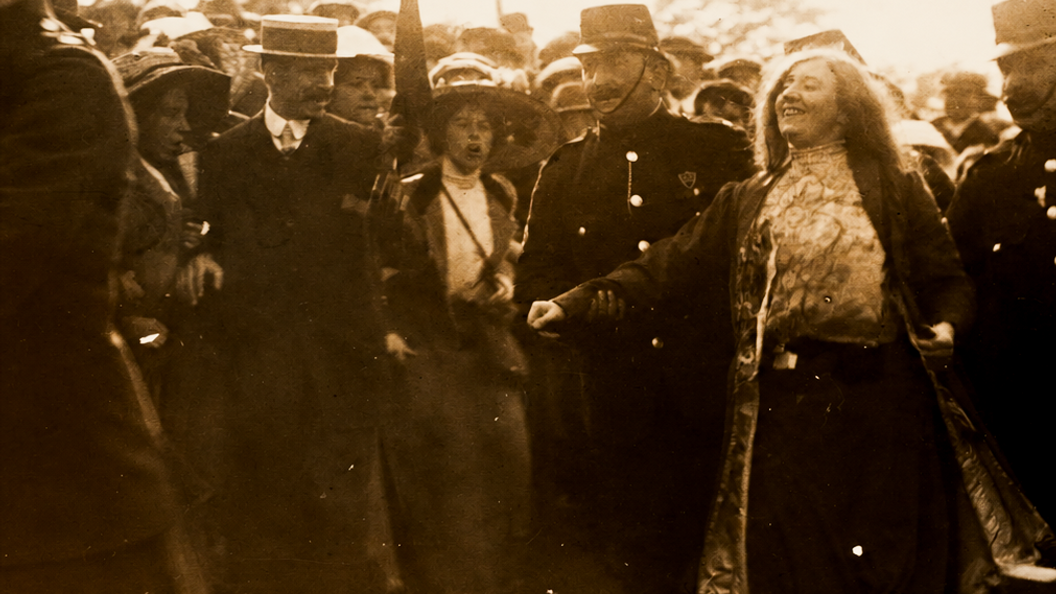
Alison Redmond-Bate was a Christian and a member of an organisation called Faith Ministries. The photo above is of a suffragette, by the way, because my subject here is not specifically preaching the Gospel but free speech.
Faith Ministries preached the Gospel on the streets. On 2 October 1997, Alison, her mother and one other woman were preaching on the steps of Wakefield Cathedral.
An anonymous couple complained about the preaching to Police Constable Tennant, who was on foot patrol. He attended the cathedral. There was not much of a crowd. He warned the three women not to stop people, but since they were not actually stopping people, he moved on. Twenty minutes later, PC Tennant returned to find that a crowd of more than a hundred had gathered. Some of the crowd were showing hostility towards the women. PC Tennant asked them to stop preaching. When they refused, he arrested them for breach of the peace.
Alison was convicted, but appealed to the High Court.
The crucial question about “breach of the peace” is where the threat is coming from. Is it coming from the preachers or from some in the crowd? Were the women acting in a way calculated to provoke a violent and disorderly reaction?
In his judgment on the preacher, Lord Justice Sedley discussed R v Nicol and Selvanayagam (1995), a case involving an animal rights protest. He explained that a speaker should not be blamed for violence that would be an unreasonable response to their lawful exercise of basic rights, such as free speech or assembly. The question was whether the speaker was acting unreasonably, or whether others were threatening violence in response to conduct that did not materially interfere with their rights.
The essential other dimension in this case was the European Convention on Human Rights. The Human Rights Act 1998 had not yet come into force, but Sedley considered the Convention relevant and said the common law already reflected many of the same principles.
Article 9 protects freedom of thought, conscience and religion, including the freedom to practise or manifest one’s religion alone or with others, in public or private. Article 10 protects freedom of expression, including the right to hold opinions and to receive and share information and ideas without interference by public authorities. Restrictions must be for recognised purposes such as preventing disorder or crime, or protecting other people’s rights.
Giving judgment in Alison’s case, Lord Justice Sedley found no lawful basis for the arrest or conviction. The women had not obstructed the highway, and passers-by were free to ignore them or criticise them. The crowd’s hostility did not make the women responsible for the risk of violence.
As Sedley put it: “Freedom only to speak inoffensively is not worth having.” Free speech also covers views that are irritating, contentious, eccentric, unwelcome or provocative, as long as they do not tend to provoke violence. The law expects people to tolerate opinions they strongly disagree with, just as it protects people’s right to express them.
Sedley rejected the suggestion that preaching about morality, God and the Bible could, by itself, justify a reasonable fear that violence was about to erupt. Since the constable had not been acting lawfully in requiring the women to stop, Alison was not guilty of obstructing him when she refused.
In conclusion, maybe some in the crowd at the steps of Wakefield Cathedral were inciting a breach of the peace, but Alison and the other two women were not guilty of this and were simply taking part in and continuing the great British tradition of freedom of speech. Recent events make us concerned about this vital cornerstone of democracy in Britain; we must continue to defend it.