
Stonewall haunting No.10
The Government’s “best evidence available” leads straight to Stonewall and a survey claiming that one in ten LGBT adults has undergone an exorcism
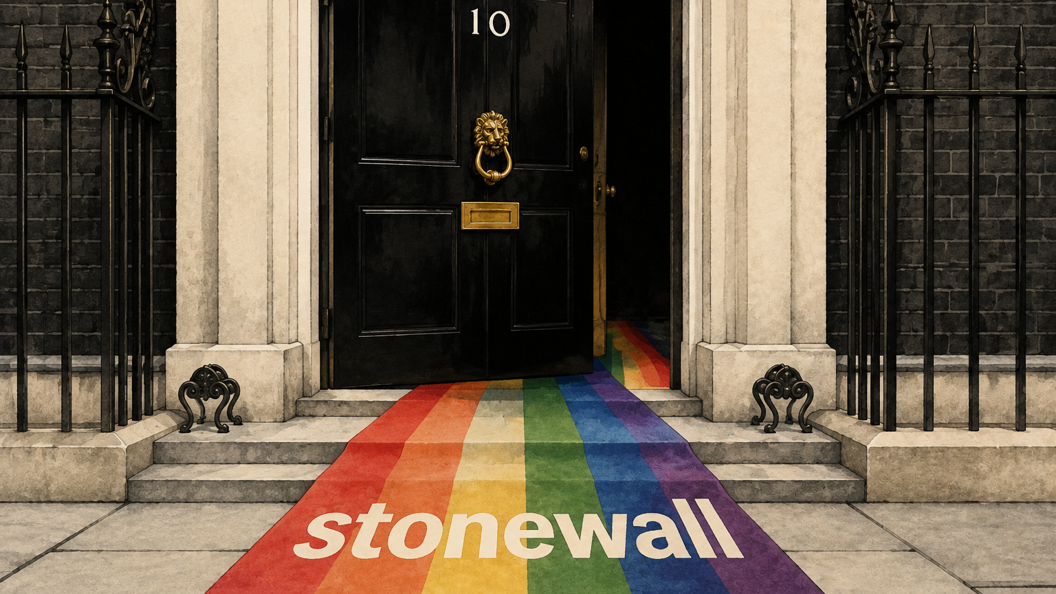
There is just one click between an official government document on the conversion-therapy ban and Stonewall, the wounded giant of trans lobbying.
The keen-eyed warrior women of Transgender Trend drew attention to the connection on X. Footnote three of the Government’s Draft Equality Impact Assessment links directly to a Stonewall campaign page promoting a ban, complete with an invitation to donate.
Shelley Charlesworth, co-director of Transgender Trend, told TERF Times:
“It’s astonishing that a government equalities impact assessment takes you straight to a Stonewall campaigning and donating page calling for a ban on conversion practices.
“It also links to a widely ridiculed Stonewall survey which claimed huge numbers of LGBT people had been subjected to exorcism. Apart from the clear desperation to find evidence that doesn’t exist, it is time that links between government and Stonewall were properly investigated.”
The government assessment relies on Stonewall’s polling to calculate how widespread conversion practices supposedly are. It describes a 2024 Opinium survey, commissioned by Stonewall and published the following year, as the “best evidence available”.
This is the same poll which produced the extraordinary claim that one in ten “LGBTQ+ adults” in Great Britain had experienced an exorcism intended to alter their sexual orientation or gender identity. Among trans-identifying respondents, the figure was a somewhat fanciful 30 per cent. Opinium surveyed 2,000 LGBTQ+-identifying adults online and weighted its overall results to be nationally representative.
Stonewall chief executive Simon Blake greeted the results without any apparent scepticism.
“These alarming figures shed light on just how common these practices remain, despite often being hidden from public view or scrutiny,” he said.
Respondents were given no clear definition of “conversion practices”, while some of the experiences recorded would not fall within the proposed legislation.
Nevertheless, answers from this survey were used to estimate that between 75,000 and 93,000 people undergo conversion practices in England and Wales every year.
Attempts to introduce a trans-inclusive conversion-therapy ban have resurfaced over the years like a turd that will not quite flush.
Public enthusiasm reached its high-water mark with a 2020 petition signed by 256,392 people. The Make LGBT conversion therapy illegal in the UK petition, which closed in September 2020, prompted a heavily oversubscribed Westminster Hall debate in March 2021, during which every backbench MP called to speak supported a ban.
Kemi Badenoch, then Minister for Equalities, was more circumspect. Although she reiterated the Government’s commitment to ending conversion therapy, she declined to promise immediate legislation. Instead, she stressed the difficulty of defining the practice and the importance of protecting legitimate counselling, religious freedom and people’s ability to discuss and understand their identities.
It was an unusually sober contribution at a time when caution was in short supply.
Inside No 10, Henry Newman, a close ally of Carrie Johnson and senior adviser to then Prime Minister Boris Johnson, was reported to have championed the conversion therapy ban. Separate reports said he supported Stonewall’s role within government.
Outside Westminster, organisations receiving public money continued to campaign for legislation. Galop, the LGBT anti-bullying charity, received more than £300,000 from the Government to operate and expand a dedicated conversion therapy support service over three years. Yet, Sex Matters revealed only 51 people approached Galop seeking help specifically because of alleged conversion practices.
By 2022, more than 100 LGBT+ organisations had lined up behind the campaign. Its celebrity-flecked open letter, published in July 2020, attracted 86 signatories, among them Elton John, Stephen Fry and Russell T Davies. The following February, Fry backed Peter Tatchell’s gut-churningly twee Stop Dithering campaign, urging Boris Johnson to outlaw attempts to alter either sexual orientation or gender identity. Westminster was not being gently persuaded. It was being carpet-bombed with petitions, famous faces and organised pressure.
The campaign has outlived Theresa May, Boris Johnson, Liz Truss, the lettuce, Rishi Sunak and Sir Keir Starmer. The draft Bill has now washed up in Andy Burnham’s in-tray.
Labour says the proposed offence is tightly drawn and will criminalise only abusive conduct intended to change somebody’s sexual orientation or transgender identity where it causes serious harm, alarm or distress. Critics fear that its elastic language could still place parents, therapists and teachers in legal jeopardy for challenging a child’s belief that he or she is transgender.
Politically, the Bill may also help Labour placate trans activist backbenchers and unions left furious by the Supreme Court’s ruling that “sex” in the Equality Act means biological sex.
But appeasing swivel-eyed activists in and outside parliament with criminal law is dangerous business. A campaign built on a laughable exorcism statistic ought to have given up the ghost. Instead, it looks set to haunt us all.