Stonewall deserves to fall
Over the past decade Stonewall has metastasised into a biology-denying cult with an all-access pass to government. A version of this article was first published in Unherd
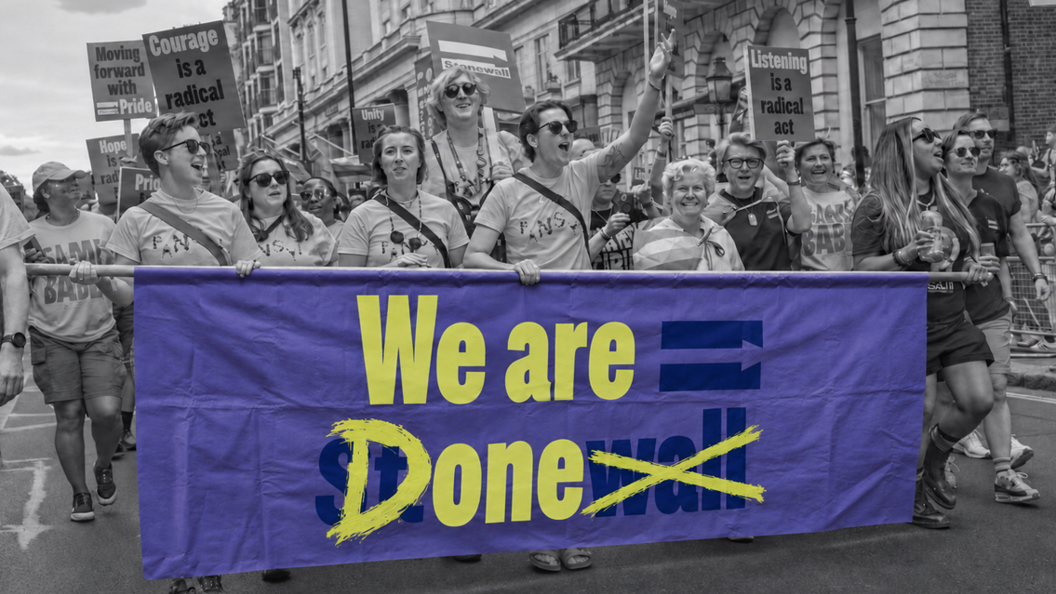
Simon Blake, the man tasked with rebuilding Stonewall, presented a brass neck, cloth ears and Teflon-coated testicles to Guardian readers this week. In an interview with Gabby Hinsliff, he bemoaned the plight of trans-identified people in Britain, recounting the experiences of friends and colleagues who feel increasingly pessimistic about the future. Nowhere in his interview does Blake acknowledge that the charity he now leads helped create the confusion and distress he laments, nor why so many LGB people oppose the Conversion Practices Bill he backs.
Instead, Blake opined that government guidance had curtailed their access to public life, healthcare and workplace toilets, and coughed up shroud-waving statistics about suicidality. He recalled an evening out with friends: “They were frightened about going to the toilet – each time that someone went to the toilet, it was a question mark. That’s not the way anybody should be expected to live.”
But the situation his friends now apparently find themselves in is entirely due to Stonewall’s error. Under CEOs Ruth Hunt and then Nancy Kelley, Stonewall spent a decade promoting gender self-identification as best practice for employers. It expanded “trans” to include cross-dressers, championed male “lesbians” such as the bearded psychotherapist Alex Drummond, and redefined “lesbian” and “gay” as same-gender rather than same-sex attraction. Kelley even likened lesbians’ sexual boundaries to “sexual racism”. All the while, Stonewall drew millions in taxpayer funding, enjoyed support across government and collected fees from roughly 850 employers.
Blake’s friends might not like having to use facilities suited to their sex, but all the Supreme Court did last year was clarify that they never should have been told otherwise.
As Akua Reindorf KC noted in her 2020 inquiry into policies at the University of Essex, Stonewall had stated the law as it “would prefer it to be, rather than the law as it is”. This was down to its underhanded strategy of using internal policies to enforce social change ahead of legal changes. But reform of the Gender Recognition Act didn’t come to pass. Now, this might make some people angry and distressed, but they should direct their anger to Stonewall, the organisation that overpromised and lied to them.
Blake now says, “We need to be able to have discussion, but we do have to find ways to do that without heat.” He could start by owning the damage his organisation did and the people it smeared.
Anyone who’s followed these issues closely will know that we are long past hand-wringing. We are beyond the clichés of “less heat, more light” and spaffed-up platitudes about “toxicity from both sides”. Lesbian, gay and bisexual people who dare not to believe in the magic of pronouns, who know that when they were young they could easily have found themselves on the pathway to sex change, will not be so easily placated. We are angry.
Yet Blake and Stonewall are still not listening, backing the dangerous Conversion Practices Bill. At around the same time as Stonewall was claiming toddlers can be transgender, data released by the closed and scandal-ridden Gender Identity Services clinic showed that 89% of female patients and 81% of male patients with recorded sexuality were same-sex attracted. Cass also recorded reports of girls who identified as trans before recognising themselves as lesbian. Why back a law that could make it harder to help these teenagers explore being gay or bisexual?
Over a decade, the former gay rights charity metastasised into an extremist lobby group with an all-access pass to government. There is no salvaging the reputation of an organisation that will not own up to its mistakes. There is no hope for any organisation that still, however politely, clings on to the fiction of the “male-bodied lesbian”.