Shaken Quakers
The Society of Friends shuns sex realists in its ranks and flouts equality law
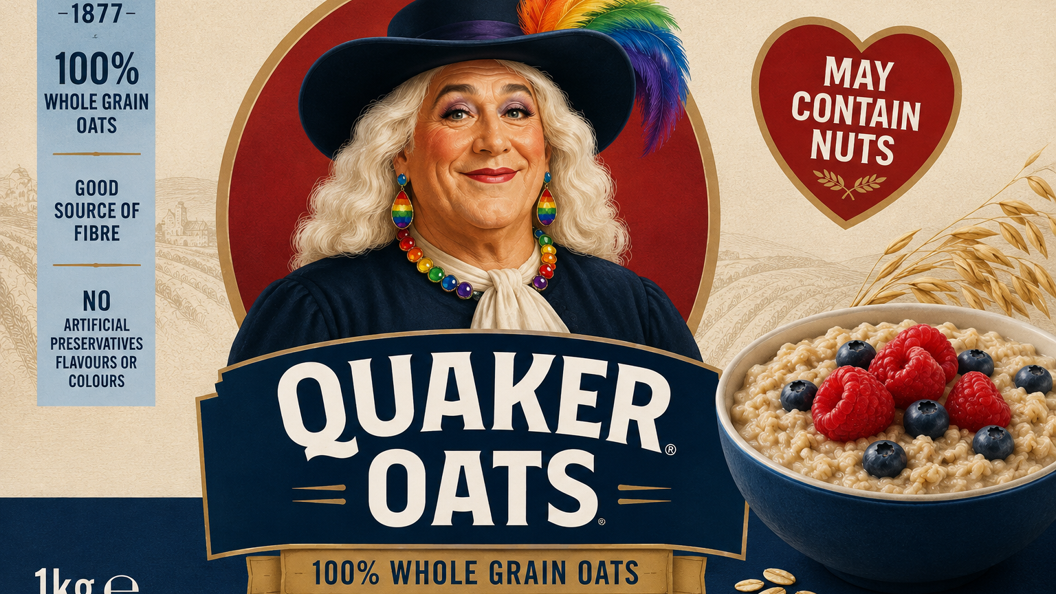
If I had to plump for a religion, I might be tempted by the Quakers. It’s not just the aggressive egalitarianism, the proud history of campaigning against abuses such as slavery, or even the fact that they built empires from confectionery. It’s that they’re awkward bastards. Questioning authority is practically a tenet of what is known as The Society. Friends, as Quakers refer to one another, are advised to “Respect the laws of the state but let your first loyalty be to God’s purposes.”
Unfortunately, the conviction that you’re on the side of righteousness can make it remarkably easy to trample over those you’ve decided are not. And on the matter of sex-based rights, Britain Yearly Meeting (BYM) trustees and senior staff who set policy for Quaker places of worship have opted to shaft women.
Following the Supreme Court judgment in For Women Scotland, which established that “sex” in the Equality Act refers to biology, Quakers in Britain reaffirmed a policy under which toilets labelled “female” at Friends House in London and Swarthmoor Hall in Cumbria remain open to men who identify as women. Women who object, or, more broadly, “anyone who is not comfortable in a trans-inclusive segregated space”, are invited to use self-contained facilities instead.
In tones liable to send any self-respecting person running to the Armitage Shanks, they stressed that inclusion “should not be just about toilets” and pledged to make Quaker spaces more welcoming and accessible. “This is what Love requires of us,” they gushed.
If Quakers sincerely believe the Supreme Court has produced an injustice, peaceful resistance to its consequences has impeccable Quaker pedigree. What they appear to have forgotten is that challenging fashionable orthodoxies does too. Feminists and switched-on men have spent years fighting an institutional consensus that treated “trans inclusion” as an uncomplicated good and women’s boundaries as an embarrassing obstacle to it.
Michelle Caulkett, a member of Sex Matters to Quakers, a sex-realist group within The Society, told TERF Times she had “noticed a shift over recent years away from spirituality and toward politics”.
Last year, the group applied to become a Quaker Recognised Body. Trustees opposed the application, saying its principles contradicted the will of the Yearly Meeting. More revealingly, they warned that recognition could create “reputational risk” and undermine the Quakers’ “leadership role” on trans inclusion. The application was subsequently rejected.
Reputational risk? Leadership role? The language belongs more naturally in an HR department than in a religious movement with a centuries-old tradition of putting conscience before convention, popularity and, on occasion, the law.
That tradition depends upon discernment, Friend Caulkett told me. Yet on sex and gender identity, she said, “rather than tolerating different views pseudo-magisterium has issued edicts”. Sex realist Friends, she added, “have been treated appallingly”.
The justification for overriding sexed boundaries rests heavily on the idea that trans-identifying people require special protection. Quakers say their policy prevents people from having to “out” themselves when taking a leak. In practice, very few would need to do so: there are many more bricks than dolls.
As for who is at risk, Quakers have warned that excluding men who identify as women from female spaces puts “trans women at heightened risk”, while declaring that “assuming a trans person poses a risk simply for being trans is transphobic”. Yet a recent study by Oxford academics Prof Michael Biggs and Dr Ace North found that, across the past decade in the UK, trans people were more likely to be perpetrators of homicide than its victims. And as any trans widow will tell you, a man doesn’t become less male, or necessarily less threatening, because he masturbates to sissy porn, wears knickers and insists on using the Ladies’ lavs.
But this is less a contest between emotions and facts than between whose feelings matter. Today there are around 280,000 adults in the UK who identify as trans. Meanwhile, an estimated 1.8 million women in England and Wales have experienced rape or attempted rape since the age of 16. Pissed-off or frightened women simply aren’t considered as deserving of compassion as sad men. And there is little kudos, even among people who pride themselves on independent thought, in telling men No.
Quakers have not betrayed their radical tradition by defying the law. They have betrayed it by becoming so certain of their own righteousness that they can no longer tolerate challenge from within. The Society built on discernment should be capable of asking whether claims about vulnerability are true, whether women have competing rights worth defending, and whether its own position might be wrong.
Instead, the awkward bastards have become the people telling the awkward bastards to shut up. There can be few things less Quakerly than that.