Rebel in ermine: Baroness Fox on shaking up a “student union for old people”
Revolutionary-turned-peer Baroness Claire Fox talks to Jo Bartosch about changing her mind, keeping her principles and why she accepted a seat in an institution she wants to abolish
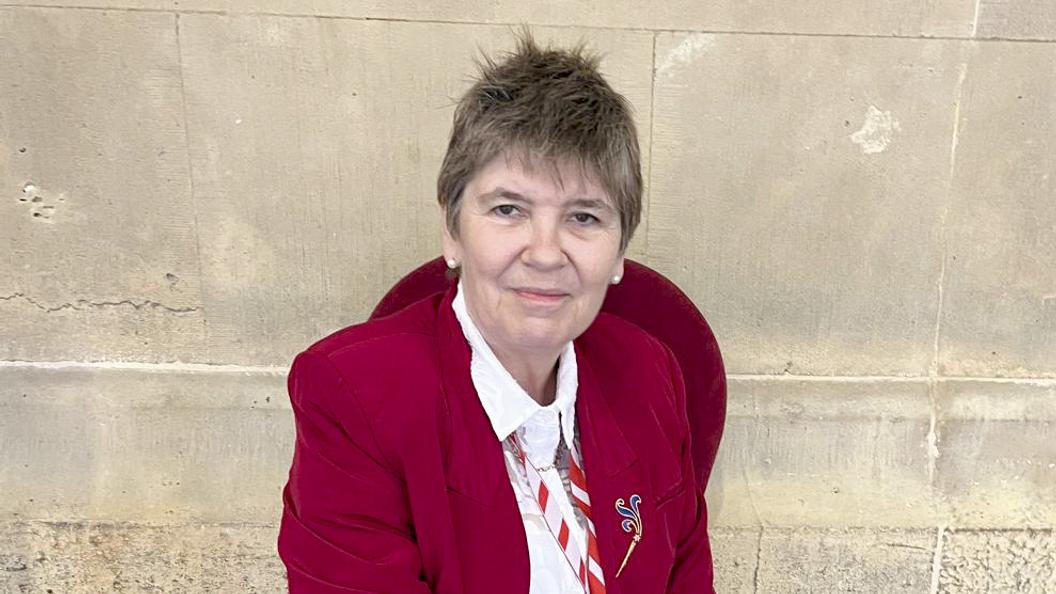
Claire Fox was packing boxes in Brussels when No.10 rang with an unlikely question: would she accept a peerage? She assumed it was a prank. After all, she had long argued that the Lords should be abolished.
On realising the offer was sincere, she immediately dismissed it as “ridiculous”. But then she thought about the people she had advocated for in the role she was leaving. “The people I represented as a Brexit Party MEP would otherwise never have a voice in Parliament.” Six years later, she is still an outsider by conviction, though she is making her case from inside the institution she tells me she still wants to abolish.
Despite being immersed in preparations for the Battle of Ideas, Baroness Claire Fox made time to talk to TERF Times. She knows that many readers will disagree with her and is candid about where her politics diverge. Fox believes absolutely in women’s equality and has been involved in the fight for reproductive rights, but dislikes what she calls “victim feminism” and is first and foremost a free speech advocate. This combination of conviction and willingness to engage across disagreement is exactly why I wanted to interview her about her move to Westminster politics.
Fox’s journey from “good Irish Catholic” to Brexit MEP took in the Revolutionary Communist Party and two decades on BBC Radio 4’s The Moral Maze. Her views have changed many times, but her commitment to free speech has not. She describes a Road to Damascus moment at university: she was still a teenager when she argued passionately against abortion in a university debate and won.
“Afterwards some feminists in the audience took me aside and argued with me rather than just screaming at me. They changed my mind.”
So that she could be absolutely sure of the arguments, she read everything she could get her hands on and thought through the issue, becoming “firmly pro-choice” by the age of twenty and throwing herself into the fight for “women’s reproductive rights.”
But by the time she was finishing university, the student union put forward a motion to disinvite an anti-abortion speaker.
“I was genuinely shocked. I argued in defence of their right to speak, and people immediately said, ‘Oh, she’s only doing that because she’s anti-abortion.’ But I’d been through a real struggle with myself and my conscience, and I’d changed my mind. I genuinely believe you can convince people. I’d been through that change myself, so I was convinced that the more people were allowed to speak, the more chance there was of changing minds.
“What is democracy for if we decide that everyone who disagrees with us is wrong and refuse to listen? On that basis, we’re stuck forever.
“The consistent thing isn’t that I’ve held the same opinions. I’ve changed my position a lot. It’s that I believe I can be persuaded, and that has made me committed to giving other people the chance to be persuaded too.”
Fox entered the Lords in 2020 and discovered, to her surprise, “a student union for old people”.
Her welcome to the chamber was bruising. She says the campaign against her appointment, which she saw as part of a wider media attack on Boris Johnson, made her self-conscious before she had even taken her seat. The peerage came from his office, not the Prime Minister himself. “I don’t think he’d know me if he fell over me.” She believes it was part of the post Brexit pitch to Red Wall voters.
The message is: learn to speak properly, or you won’t be allowed into the club.
Lockdown brought intense scrutiny, much of it focused on Fox’s past in the Revolutionary Communist Party, whose publications defended Irish republican paramilitaries, including the IRA bombing in Warrington that killed two boys. Colin Parry, whose son Tim died in the attack, said Fox had “never apologised for defending the IRA bombing” and that her peerage “offends me and many others deeply”. Fox did not apologise for the views that she had once held, but she did clarify in a statement that, contrary to much reporting, she did not support or defend the IRA’s killing of two young boys. Such politically unusual, if internally consistent, positions are what earn her both respect and disdain.
Once she had found her feet, Fox had to learn how to legislate. “I realised I didn’t know how to make laws,” she says. Feeling “very much like a new girl”, she read everything she could and worked out how the process functioned, reflecting “I took it very seriously, in a kind of swotty way.”
When I ask whether Fox would ever want to fit in anywhere, she admits that she would “probably not”. Yet she takes her role seriously, mastering the detail of bills and writing her own speeches, a rarity in Parliament. This separates her from many of the career politicians who compliantly bend to the party whip.
Dealing with the business of the House of Lords shaped Fox’s route into criticism of trans activism. She recalls choosing a maternity bill as a relatively straightforward issue to get her teeth into, only to discover that it did not use the words “women” or “mothers”. Fox and her fellow peers launched a campaign to write sexed language back into law. She told the chamber at the time:
“How extraordinary and sad that saying that women give birth is so contentious, and that we are told we are brave for saying it. I feel a bit queasy when people say they commend our courage for speaking out, because we are safe here.”
Fox admits she had initially been relaxed about the transgender movement, seeing it as nothing more than “experimentation with gender.” What changed, she says, “was the movement’s scale and political force”, and the pressure she felt to affirm claims she did not believe.
Give me a bunch of fusty old experts any day over people who are just as politically reactionary as everyone else
A staunch defender of unpopular principles, Fox was easily able to withstand the abuse that came with speaking out against what she calls a “full-blown assault on reality”. She found allies in the Lords, among them Baroness Emma Nicholson and Labour peer Philip Hunt. Parliament’s deference to ideology over biology showed her that even its venerable chambers are not immune to student-politics conformity. Gender ideology, she argues, has become “an elitist, snobbish code, just like the old club rules.”
“Young people are trained. If you want to get on in the world, you learn a language, a way of being, a set of attitudes,” she says. She calls the result “an anti-elitist elite” that polices language as strictly as the old gatekeepers: “It corrects your language like those old guardians of your p’s and q’s. The message is: learn to speak properly, or you won’t be allowed into the club.”
“If they don’t go along with it, they’ll get nowhere. So they queue up to comply. It’s awful. It’s become a rite of passage into society. How else are you going to get a job in public life or the arts? These days, anywhere?”
And once inculcated, children “educate” their elders.
“Even among the older hereditary peers and people I wouldn’t have expected, the response was: ‘I haven’t got a problem with it. My granddaughters told me.’ I realised how widely accepted gender ideology had become.
“People still talk to me. Well-known feminists come over and say, ‘Of course I agree with you, but my daughter and granddaughter really care about this.’ I hear that all the time.
“There are huge numbers of well-known ‘women’s rights campaigners’ in the House of Lords, in inverted commas, who are completely against us on this. Those ‘feminists’ who’ve admitted it, sometimes in a whisper, say it’s because of their families. Others are zealots.”
With a wry smile, she adds: “Give me a bunch of fusty old experts any day over people who are just as politically reactionary as everyone else, if not worse, and use their power as legislators to impose those views on everyone else.”
Transparency and rigour is non-negotiable for Fox. When she first entered the Lords, she found “it was completely obsessed with itself. It dawned on me that the reason I didn’t know anything about it was that it talked to itself. All the speeches were aimed at each other. You could say there was no grandstanding, or you could say there was no awareness whatsoever of public responsibility or accountability.”
Embarrassed to be there, she made “some sort of mad promise”: she would put all her speeches online and try to hold herself accountable. She began writing weekly blogs “explaining what was going on inside the Lords”. At first, they were “a bit of a hit” because readers knew no more about the place than she did. “I think they quite enjoyed how naff I was, making all these terrible mistakes.”
Her attempts to open up the workings of the Lords through blogs and online clips might have been expected to irritate its communications team. Instead, she recalls, “the social media departments in Parliament seemed to be delighted that people were taking an interest.” Other peers began posting their speeches too, much to her delight. The pride she takes in this small sign of progress is disarmingly unaffected.
Fox has never skirted away from meaty issues. After university, she worked with homeless people and in mental health before turning to revolutionary politics. She joined the Revolutionary Communist Party and wrote for their magazine Living Marxism, particularly on education and the arts, alongside a day job as a teacher.
When the RCP collapsed, the magazine was relaunched as LM. Fox took a year away from teaching to help organise public events. But in her first week at the helm, the magazine ran a story falsely claiming that ITV News had faked footage of war crimes, and it became the loser in one of the most infamous libel cases of the decade.
The world changes, and I’ve always tried to examine what I believe, make sure it hasn’t hardened into dogma
Fox prepared to return to the classroom. But by now she had a profile, and the public was keen to hear from this outrageous free speech defender. So, she pivoted away from teaching and stepped into the public eye going on to become a regular on BBC Radio 4’s Moral Maze for nearly twenty years.
Fox admits she is a terrible businesswoman, but she is undeniably great at capitalising on a moment. The debates and discussions which followed the collapse of LM eventually became the Institute of Ideas, and later the Academy of Ideas.
The Battle of Ideas festival grew from that work; now it attracts over 3,500 attendees. But when she started, people told Fox that a free speech festival was a foolish idea. It began in a few rooms at the Royal College of Art and eventually moved to the Barbican. She reflects that this would be “unthinkable in today’s climate” as no arts venue would host an event for freedom of speech. Indeed, the Barbican, which is funded by the City of London corporation, has become a hub for trans activism.
Fox says the sponsorship and support from arts venues for BOI abruptly came to a halt following the Brexit referendum. Fox had done years of broadcast work and thought she knew the pressures of public controversy. But Brexit changed how some people saw her, she believes. People who had once considered her “one of us” began to treat her as suspect.
Despite backing from billionaires such as Ben Delo, funding remains a constant struggle. Each year, Fox finds herself asking whether the Battle of Ideas is still necessary. For its many supporters, the answer is clear: the space to discuss forbidden ideas has never mattered more.
It is this open-minded commitment to debate, and the ability to reflect on her own biases, that makes Fox a necessary rarity in politics.
“The world changes, and I’ve always tried to examine what I believe, make sure it hasn’t hardened into dogma, listen widely and reconsider. Sometimes I’ve kept the same view, but with better arguments because I’ve had to think it through; sometimes I’ve changed my mind. That seems to me what being a grown-up in a democracy means.”