
London councils unite against women's rights
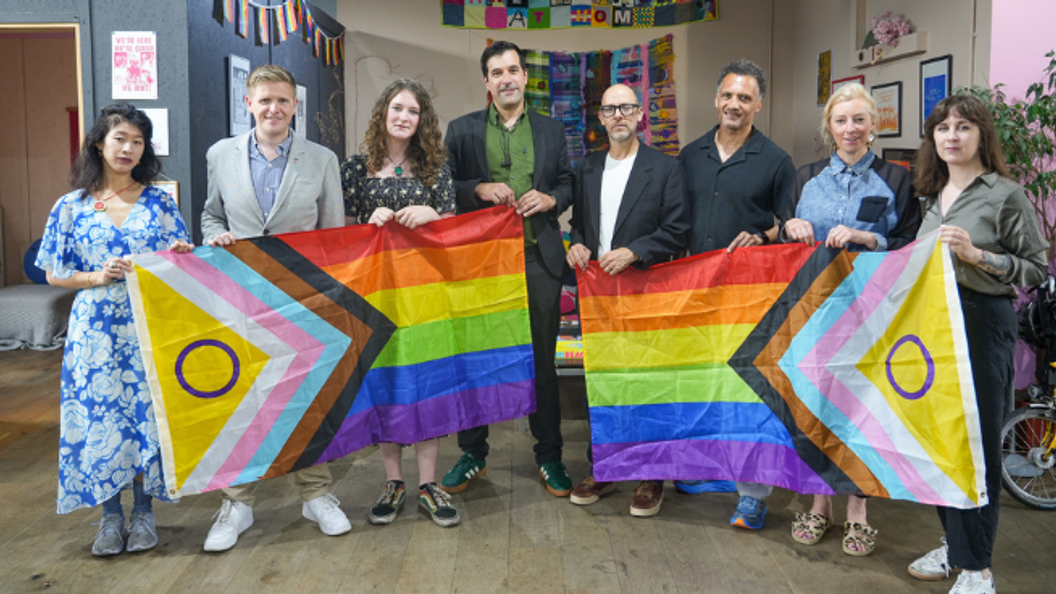
Six London councils representing 1.7 million people have joined forces to campaign against new statutory guidance protecting single-sex services.
Leaders and senior councillors from Lambeth, Hackney, Haringey, Lewisham, Southwark and Waltham Forest signed an open letter to Women and Equalities Minister Bridget Phillipson as the Equality and Human Rights Commission’s new Code of Practice came into force on Wednesday.
In an unusual intervention for authorities responsible for everything from bin collections to potholes, the councils accused the Government of failing trans people.
“We say this to you in no uncertain terms: Trans women are women, trans men are men, and non-binary identities are fundamentally valid,” their letter declares.
On Friday, Lambeth’s communications department sent an email headed “Uniting to protect Trans+ communities”, placing the campaign to abolish single-sex spaces alongside updates about street-tree planting, leisure centres and other council services.
One resident told TERF Times: “In a way, the context makes it worse. Discriminating against women is a common good alongside planting street trees and going to the gym.”
Last year the Supreme Court unanimously ruled last year that “man”, “woman” and “sex” in the Equality Act 2010 refer to biological sex.
The judgment found that interpreting the Act otherwise would make parts of it “incoherent and impracticable to operate”, specifically citing provisions covering single-sex services including changing rooms, hostels and medical services.
The EHRC subsequently updated its statutory Code of Practice, which came into force on August 5.
Although the Code does not itself impose legal obligations, it can be used as evidence in Equality Act cases and courts and tribunals must consider relevant provisions.
Yet the six councils have promised to review their practices to ensure no trans person is excluded “on the basis of our actions”.
They also complained that the Code could put staff “at risk of inadvertent discrimination”, declaring: “We won’t put our staff in the impossible position of policing entry to public spaces.”
Southwark’s approach to “inclusive” services has already caused controversy.
Last year, 60-year-old Miranda Newsom was suspended from all eight of the council’s leisure centres for a year after objecting to an “unmistakably male” person in the women’s changing room at the Castle Centre in Elephant and Castle. Police were called following the confrontation.
Lambeth has gone further, backing a motion calling for the council to refuse to implement the amended Code if its lawyers conclude it can lawfully do so. It has described the guidance as “discriminatory” and vowed to “resist” it.