
‘I cried’: Darlington nurse welcomes new NHS guidance on female spaces
Nurse Bethany Hutchison says the guidance must now be enforced across NHS trusts, after she and her colleagues took their employer to court over a male colleague’s access to their changing room.
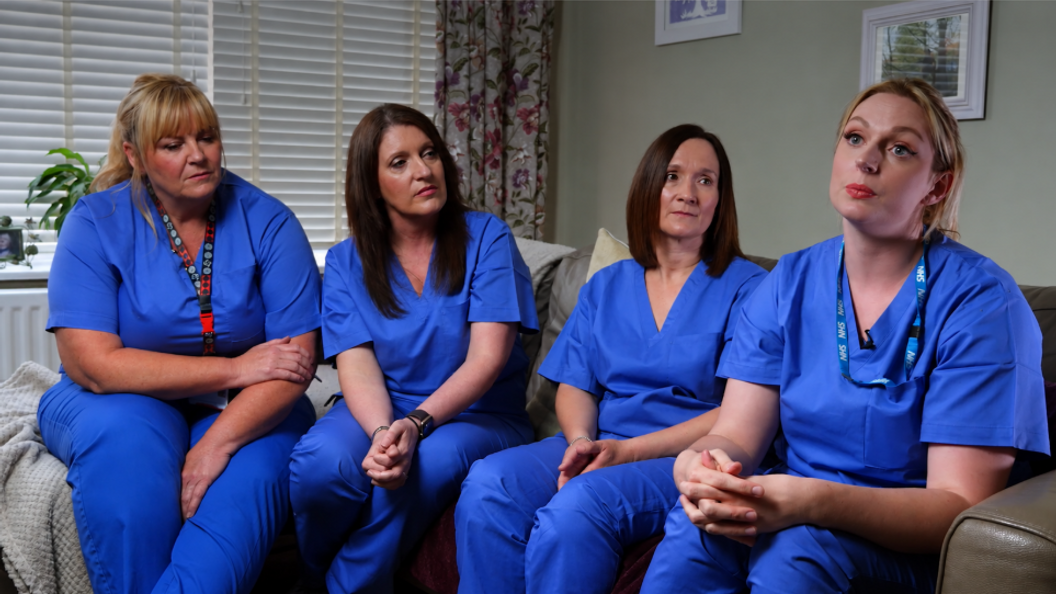
Nurse Bethany Hutchison was at work when she heard that NHS England had issued new guidance barring men from female spaces.
“I cried,” the president of the Darlington Nursing Union told TERF Times.
The guidance, first reported by the Daily Telegraph, says: “Single-sex services, such as hospital accommodation, should be provided on the basis of biological sex.” It states that trans patients should be accommodated in line with their sex as registered at birth or offered a single room. The NHS is also expected to publish separate guidance on staff facilities.
Hutchison was relieved when she heard the news, saying: “Biological sex is not an optional belief. It is a material reality and, following the Supreme Court’s judgment, it is the basis upon which sex must be understood in equality law.”
But she warned that the test would be whether NHS trusts followed the guidance, which Wes Streeting, then health secretary, had promised would be published in summer 2025.
“Too many NHS institutions have been ideologically captured on these issues, leaving frontline women to defend rights and protections that their employers should have upheld from the outset.
“The Darlington nurses should never have had to take their own employer to court to secure privacy, dignity and lawful single-sex facilities. Enforcement cannot continue to depend on the courage and personal sacrifice of individual nurses.”
The Darlington case began after female nurses at Darlington Memorial Hospital objected to sharing their changing room with a male colleague who identifies as a woman. Eight nurses brought claims against County Durham and Darlington NHS Foundation Trust. In January, an employment tribunal found that the trust had harassed the nurses by requiring them to share the facility without providing a suitable alternative. The judge said their dignity had been violated and they had been subjected to a hostile, humiliating and degrading environment.
The nurses formed the Darlington Nursing Union after they felt their existing unions had failed to support them. After the tribunal judgment, UNISON said its policy remained unchanged and that it stood by the rights of its “trans, non-binary and gender-diverse members”.
Hutchison called on NHS England, regulators and trust leaders to bring policies into line with the new guidance, the Equality and Human Rights Commission’s Code and the Supreme Court ruling. There must be “clear oversight, meaningful accountability and consequences for trusts that refuse to comply”, she said.
Andrea Williams, chief executive of Christian Concern and the Christian Legal Centre, which supported the Darlington nurses, also welcomed the guidance. She said: “It has taken a long-fought battle, led by courageous women such as the Darlington nurses, to put biological reality back at the heart of NHS policy.”
Williams said the guidance did not give staff clarity over pronoun use. She cited nurse Jennifer Melle, who was investigated, disciplined and referred to the Nursing and Midwifery Council after declining to use female pronouns for a biologically male patient. Melle was eventually cleared, Williams said, but “no nurse should have to endure that ordeal for using biologically accurate language”.
“NHS England must now make clear that healthcare professionals cannot be compelled to use preferred pronouns or penalised for declining to express beliefs about gender identity that they do not hold.”