
“Fertility Freedom” or Selling Hope?
Lexi Ellingsworth on how egg freezing makes money not mothers
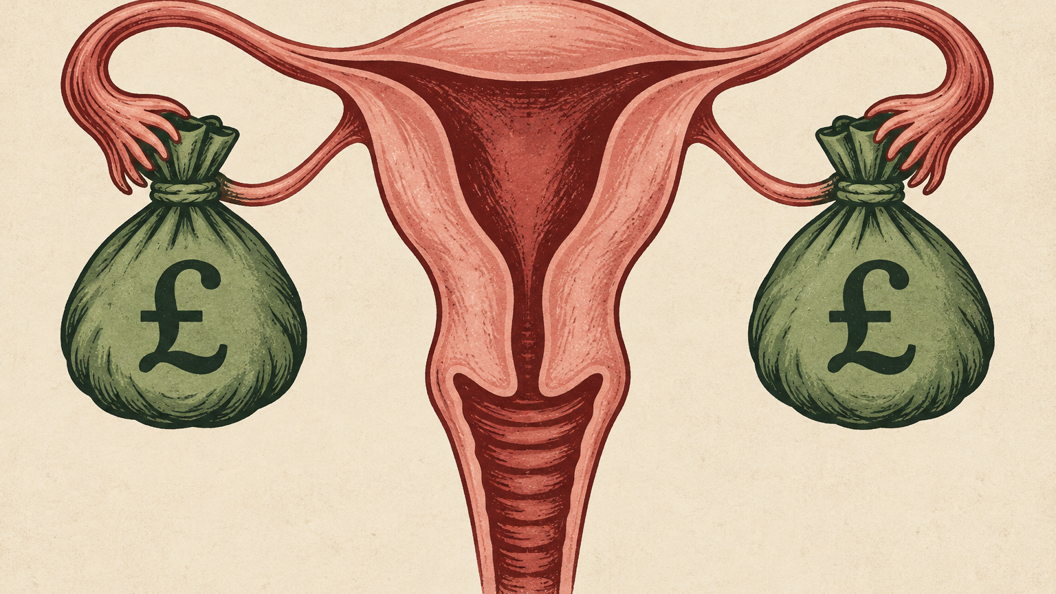
There is something undeniably seductive about the promise of freezing time. For a young woman at the height of her career, Assisted Reproductive Technology seems to offer an escape from the pressure of finding a suitable partner with whom to start a family. It seems like a no brainer. Who wouldn’t want the best of both worlds? Freeze your eggs now, carry on with your life and become a mother later when it’s more convenient and better timing, when the right partner has appeared and your career is established, or when your best sporting days are behind you.
Earlier this month this is exactly what the Royal Spanish Football Federation (RFEF) suggested, with the official announcement of a new funding programme, in collaboration with a boutique clinic, for female footballers to freeze their eggs. Just three weeks before that Chelsea Football Club announced a fertility partnership with London clinic, Fertility Plus. Chelsea FC describes this as a “first of its kind” fertility programme, with educational workshops, counselling and assessments as well as egg freezing. For Chelsea, this is for players only, whilst RFEF’s offer includes national players, first-division refs and some eligible employees.
For the Spanish players, this was presented as a way of reconciling elite sport with motherhood. The proposal came after an appeal from captain Alexia Putellas, who raised the issue of motherhood and fertility directly with the federation and supported the announcement as “a huge step forward”.
Other sportswomen, such as Olympic athlete Ana Peleteiro, questioned whether the offer really helps women or whether it puts pressure on female athletes who want to become pregnant naturally. Is this plan about women’s wellbeing or prioritising profits and maximising money-making opportunities as football stars work for longer?
Maica Garcia could speak from experience. Almost a year after giving birth to her daughter Olivia, she was dropped from the Spanish Aquatic club CN Sabadell. Garcia is considered to be one of the greatest and most dominant players in the history of women’s water polo. Speaking through tears at a press conference last week, she said:
“It has been an honour to wear these colours, but I do not deserve this. I haven’t been respected during this final period. I didn’t want to believe it was true. I thought they would tell me they were making a mistake and that they wanted me on the team.”
Similar initiatives are already emerging in other UK, particularly among City law firms. American firm Cooley has offered London employees up to £45,000 towards fertility and ‘family-forming’ services which includes egg freezing, while Freshfields partnered with Carrot fertility to offer benefits worth up to $60,000 covering treatments such as egg freezing and IVF. Are these employee benefits a perk of the job, giving women greater choice, or asking them to postpone motherhood to fit demands of their employers? Is motherhood what these women will ultimately sacrifice?
Modern fertility technology can genuinely be a valuable option but the problem begins when an option becomes a promise. The fertility industry has always sold hope. Big Fertility has commercial incentives to frame egg freezing as something akin to an insurance policy. Freeze your eggs when young and we guarantee you a baby will be waiting for you when you’re ready.
That may be the message of the ad campaigns and reported oocyte survival after vitrification and thawing is in the region of 90–97%, but survival of the egg is not the same thing as having a baby. For one thing, a batch of frozen eggs has to survive the thaw. They have to be fertilised (with donor sperm if finding a partner is also put off until later) and the fertilised egg has to develop into an embryo. The embryo is then graded, and sometimes tested again, to determine whether it is considered worthy of implantation
Britain’s fertility regulator, the Human Fertilisation and Embryology Authority (HFEA), cautions that egg-freezing success figures are relatively limited and advises patients to look at the much larger body of data from IVF using fresh eggs in their respective age group. This is just one of the great tricks of Big Fertility. Those perfectly promising numbers at the outset can conceal a much less impressive outcome. Let’s suppose 90% of eggs survive the thawing process. That sounds like a reliable figure, but what percentage ultimately become a live-born child? That is the number a woman contemplating egg freezing actually wants to know.
And there is no single answer as it depends on the age at the time of freezing your eggs. A large 2025 database study of elective fertility preservation reported a cumulative live-birth rate from egg ‘warming’ of 28.9% with a significant decline as the age at freezing increased, dropping to about 3.0% in those older than 42 years. The “oocyte-to-baby rate” in an earlier study measures this at 6.5%, with the understandable result that the more eggs you fertilise and implant as embryos, the more likely you are to get a baby.
So the overall message is, if you want a baby and plan to freeze your eggs, do it early. If you’re going to implant them as embryos, don’t leave it too late. Young women face a 30% increased risk for developing ovarian hyperstimulation syndrome (OHSS), a side effect of the ovarian stimulation required for harvesting your eggs. The effects can be mild. Bloating, nausea with some discomfort, which undoubtedly impact a training schedule, but less so than the physical demand of pregnancy - or it can be more serious, difficulty breathing, thrombosis and it could be fatal. The first death from OHSS complications was recorded back in 1993. Eleven years later Temilola Akinbolagbe died in 2004 from blood clots which led to a heart attack. She was 33 years old.
A study of 38,957 women in England, Wales and Northern Ireland looked at women with confirmed OHSS who were treated in intensive care, found that they were significantly younger than those without OHSS. A very large study of 1.58 million oocyte-pick-up cycles in China found that women aged under 35 warrant particular attention for OHSS risk as women aged 26–30 years old accounted for nearly half (48.4%) of moderate/severe OHSS cases. The Royal College of Obstetricians and Gynecologists also identifies being under 30 as a risk factor for OHSS.
Most women who freeze their eggs never use them.A recent large US study found that fewer than 6% of women undergoing elective egg freezing returned to use their eggs within seven years. In Spain, one report estimated that only around 30% of women eventually use their frozen eggs. Some of these women may go on to conceive naturally. Some may have decided not to have children. Some may still intend to use their eggs later. But is this an insurance policy surplus to requirements or a fertility pause button that may not be needed? We need to be precise as the difference matters enormously when financial incentives are being offered to young women to delay motherhood as a way of managing the collision between their careers and family planning.
This is where the football initiatives become much more interesting as specifically, elite female athletes really do face a problem. Their peak sporting years overlap with their reproductive window. Pregnancy can interrupt key competitions and returning to physical training after childbirth can be incredibly challenging. Contracts can be insecure and childcare is expensive. These are genuine physical realities and structural problems.
And providing fertility preservation as one option can seem an entirely reasonable response but if the answer becomes “Don’t worry about having children now. Freeze your eggs and carry on playing” then something has gone wrong because the solution has shifted from looking at the sport and policy to impacting a woman’s body. The biological difference between the sexes is stark in sport, and perhaps even more when it comes to fertility as neither the RFEF or Chelsea’s Football club offer male football players offered funding or preferential pricing to freeze their sperm.
That is precisely the criticism made by Peleteiro who labeled the plan “profoundly sexist” (machista) and A “Sucker’s Game” (Engañabobos). Perhaps genuine progress would mean protecting contracts, supporting female players in pregnancy and motherhood and ensuring athletes can return to competitions after childbirth rather than simply encouraging them to put their personal plans on ice. Why should a woman have to choose between becoming a mother and remaining at the top of her profession? Egg freezing can offer women another choice but it cannot, by itself, solve the underlying problem. Whilst it may appear to be ‘empowering’ it’s worth being reminded that ‘fertility preservation’ is a commercial business. And so is football. Anyone who has bought a season ticket or paid a clinic bill and annual storage fees knows this.
When the fertility industry takes a complicated reality and packages it into the much simpler emotional proposition of “future-you will thank present-you” that is an extraordinarily powerful thing to sell young women, especially when she has been told that her career is incompatible with motherhood.
The alternative is a much harder question to confront: How much time do I have before I have to choose between being a mum and competing in sport?
Science may be able to freeze eggs but it cannot freeze time.