Cock-Ayed Committee
The joint committee scrutinising the Government’s Conversion Practices Bill includes a clutch of MPs and peers who have already called for a trans-inclusive ban, raising questions about how much appetite there will be for examining its risks to therapists, parents and free speech
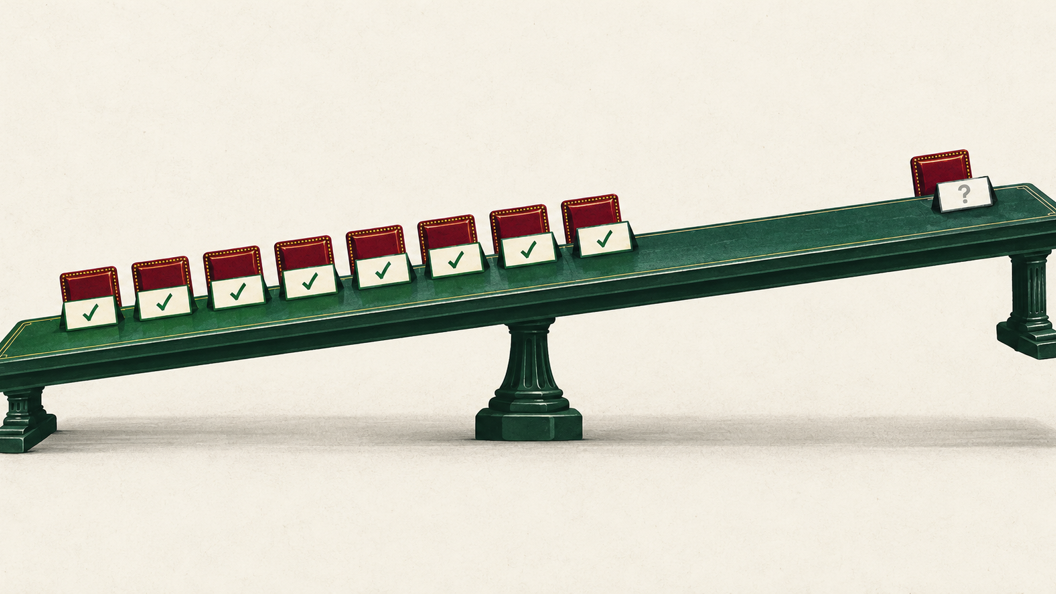
The joint Select Committee appointed to scrutinise the Government’s Conversion Practices Bill is brimming with trans activist politicians who have previously backed a sweeping and ban.
Olivia Bailey, the Labour MP for Reading West and Mid Berkshire, has been among the Bill’s most conspicuous parliamentary champions. A former minister for equalities, Bailey is the Government’s newly installed gender cheerleader. Her first-ever parliamentary question concerned conversion practices and she has repeatedly pressed the Government to bring forward legislation.
Danny Beales, Labour MP for Uxbridge and South Ruislip, has also publicly backed a ban. In June, the group LGB Labour asked him on social media to oppose the Bill and “stop transing the gay away”. Wriggling around the question, he replied: “Conversation practices are abuse. You can’t pray the gay away & trans people exist. LGBT rights are under threat across the globe exactly because of views like this.”
Feryal Clark, Labour MP for Enfield North, complained in 2021 that the “Government cannot continue to dither and delay”, echoing the slogan of the Stop Dithering campaign, led by Stephen Fry and Peter Tatchell. She has made few recent public interventions on the issue, but there is no indication that she has changed her mind.
Samantha Dixon, Labour MP for Chester North and Neston, accused the previous Conservative government of a “shameful U-turn on banning conversion therapy”.
“That move has abandoned LGBTQ+ people who face this abusive practice,” she told the Commons in November 2023.
Marie Goldman, the Liberal Democrat MP for Chelmsford, has been explicit that she wants a “trans-inclusive ban” and has pressed ministers for a timetable to introduce one.
The committee’s sole Conservative MP, Sir Jeremy Wright, is the exception. He does not appear to have set out a clear public position on the proposed ban. Whether he will offer balance and scrutiny, or simply a Tory bum on a seat at a Labour dominated table, will be worth watching.
The Lords’ contingent is less clear-cut. Baroness Smith of Basildon, Labour’s leader in the Lords, has a strong record on LGB issues, although no clear public position on conversion practices has emerged.
As the Government’s Lords spokesperson for equalities, and now its Special Envoy for LGBT+ Rights, Lord Collins of Highbury has helped to advance a trans-inclusive ban. Yet he has also raised the possibility that teenagers coming to understand themselves as same-sex attracted may be led to believe they are transgender. In 2024, he asked ministers what safeguards would stop young people being “accelerat[ed] through affirmation” into gender services, and prevent those services becoming a form of conversion therapy.
Baroness Burt of Solihull is an insistent, persistent and consistent supporter of a trans-inclusive ban. To that end in 2023 she sponsored a Bill covering attempts to change or suppress gender identity.
The Bishop of Manchester, the Rt Revd Dr David Walker, has welcomed a ban no fewer than three times, following the Queen’s Speech in 2021 and the King’s Speeches in 2024 and 2026.
There is, of course, nothing improper about committee members having opinions, or the membership reflecting Labour’s dominance of the Commons. But this is not a Bill dealing only with electric shocks or forced confinement, conduct that is already criminal. It creates a new offence covering “any conduct” intended to make someone have, not have, or believe they have or do not have a particular sexual orientation or transgender identity.
The offence requires abuse and serious harm, but the Bill directs courts to consider, among other things, “psychological or emotional pressure”. Its protection orders can be made without notice, and breach carries up to two years’ imprisonment.
That makes the committee’s task especially important. It must establish whether the Bill can distinguish genuine abuse from ordinary parental concern, clinical caution, religious belief and the simple refusal to affirm another person’s self-perception. On the public record, several members appear to have reached their conclusions before the scrutiny has even begun.
An earlier version of this article incorrectly referred to Olivia Bailey MP as the Minister for Equalities. She held the post of Minister for Equalities at the Department for Education from 7 September 2025 to 22 July 2026.