Claire Loneragan
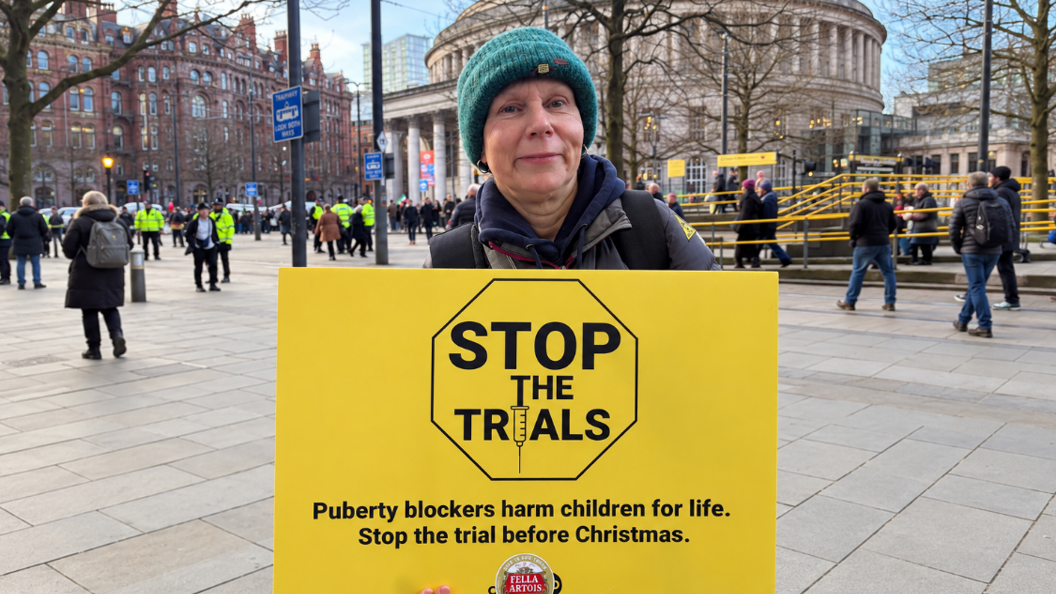
Written by Charlotte Revely with contributions from some of Claire Loneragan’s other friends, Heather Binning, Cathy Larkman, Louise Somerville and Emma Thomas.
Most of us have wondered what we would do if we knew our time was short. Claire spent hers fighting the battle of a lifetime: defending women’s rights. Less than two weeks before she died, knowing she probably had only days left, she took the trouble to write to the BBC to complain about the Woman’s Hour 80th anniversary episode. It was Claire in a nutshell: determined, dedicated, articulate and fierce to the very end.
I met Claire in July 2021. We had become mutuals on Twitter, and I realised we lived within a few miles of each other. I was still flailing around, trying to make sense of a world gone gender crazy. Claire was streets ahead. When I said I was struggling to understand what on earth was happening, she told me she had written an essay trying to capture the madness and asked if I would like to read it. I confess my heart sank when she said it was 20,000 words. It sounded less like an essay than a dissertation, but I needn’t have feared. It was clear as a mountain spring. Not a word wasted.
In later years, that clarity became her signature in the blog posts and reports she wrote or contributed to. Claire was drawn to this fight, like many others, because she had felt what would now be termed gender dysphoria from childhood. She said it did not really cease until she had her children. She knew that if someone had offered her the chance to become a boy during her teens, she would have taken it. The thought that her younger self might have made a decision denying her the love and joy her husband and children brought her horrified her. This, combined with her strong sense of justice and highly tuned bullshit detector, made her a passionate advocate for women’s rights and child safeguarding.
After a successful corporate career as an IT professional and engineer, Claire joined the Women’s Rights Network (WRN) in the summer of 2021. Heather Binning, the Network’s executive director, remembers how quickly Claire proved committed and capable, giving a great deal of her time to the cause. WRN gave her a “worthy outlet”, where she made many new friends and helped shape “more than one battlefront”. She became a director in 2022 and was held in high regard by everyone she met.
Claire was a doer. She set up the Somerset and Dorset WRN branch and became a driving force behind WRN National. She took on tech support, merchandise, policy and procedure, compliance, media, lobbying and consultations. Much of her work was essential but not visible. Heather recalls her “extraordinary ability to refine a position, fine-tune an argument” and her sharp sense of humour, which shines through in Claire’s Substack writing.
Claire did not seek the spotlight, but nor did she shun it. I remember her stepping up at short notice to be interviewed live on a Channel 5 talk show segment about Drag Queen Story Hour. She faced a hostile host and a drag queen, and she aced it. With no formal media training or experience, she spoke the truth in the clear, calm and rational way that became her trademark.
Her friends saw that same courage in other settings. Emma Thomas remembers being trapped with Claire in a pub in Bristol by antifa. Emma was panicking but Claire remained “so calm and cool” and, Emma felt, “so much braver”. When Emma suffered a stroke shortly before she was due to speak at a conference in Lisbon, Claire flew out with her and stayed by her side. She was, Emma says, the person who was there behind the scenes, making sure everything went well. “I couldn’t have done it without Claire.”
Emma also remembers Claire’s appetite for adventure. She had biked across Europe in her youth. In retirement, she told Emma, she had decided to “say yes as much as possible to everything”. “That’s how we went to Brighton and Birmingham and Oxford and back in a day. So many adventures.” At home, Emma says, Claire was the breadwinner, while her husband took care of the housework and cooking.
Cathy Larkman says she and Claire clicked instantly and came to call themselves the “twins”. They finished each other’s sentences. Claire was the sensible twin, Cathy says, and always looked out for her, keeping her in line. Cathy listened, reflected, and usually realised Claire was right. Generous with her time and wisdom, and there was no subject, however broad or complex, that Claire could not get her head around. She helped Cathy with a report on police and with evidence for a Senedd committee hearing on so-called “gender quotas”, and wrote blogs on a wide range of subjects after doing the research and critical thinking. They spent hours discussing serious issues, but made plenty of time for fun too. Most of their photographs together show them laughing and messing about.
Claire devoured books, both non-fiction and the classics. When Claire knew her time was limited, she began choosing books carefully, thinking she might have time for twenty more. She returned to Pride and Prejudice, a book she had read many times before, because she always found something new in it.
Claire’s passions extended far beyond campaigning. She was a knitter, baker, gardener and beekeeper. Despite her petite frame, she was a former biker. She loved music and lived for music festivals, especially Beautiful Days. She was passionate about sport and fitness, and fought against men competing in the women’s category because she saw it destroying something precious to her and to many other women and girls. Louise remembers Claire enjoying exercise classes and “whizzing around with the mower”. “That such a fit and healthy woman could leave us feels like a treasure has been stolen,” she said.
Claire was one of the most extraordinary people I have ever met. She said this was the most important work of her life and gave it everything, while still finding time to be a wife, mother, daughter, sister and friend. She had friends who were sceptical of her views, yet she could disagree agreeably. Louise remembers how, even when your mind was firmly made up, “Claire’s giant intellect would gently step in and explain an alternative point of view”. Almost without realising it, you might find yourself listening to a podcast Claire had mentioned in passing.
When Claire told Cathy, “They can’t fix me”, Cathy’s heart broke. Claire faced her terminal illness with her usual good sense and wanted people to remember her in a “happy frame of mind”. Louise remembers her meeting life “calmly and with humour”, sometimes with humour so dark it left Louise flailing.
Claire was tiny in stature, but a giant in intellect, and, as Cathy says, “the loveliest, funniest woman you could ever hope to meet”. Heather says she has left behind a very large “Claire-shaped hole”. Emma hopes people will take this from Claire’s life: “Say yes to life and adventures. Go to the terfy action. Write to your MP. Be brave. Be more Claire.”