British Medical Association or Bloody-Minded Activists?
On Wednesday, the UK’s doctor’s union continued its long and shameful history of opposing medical best practice, ignoring its members, and defying the law
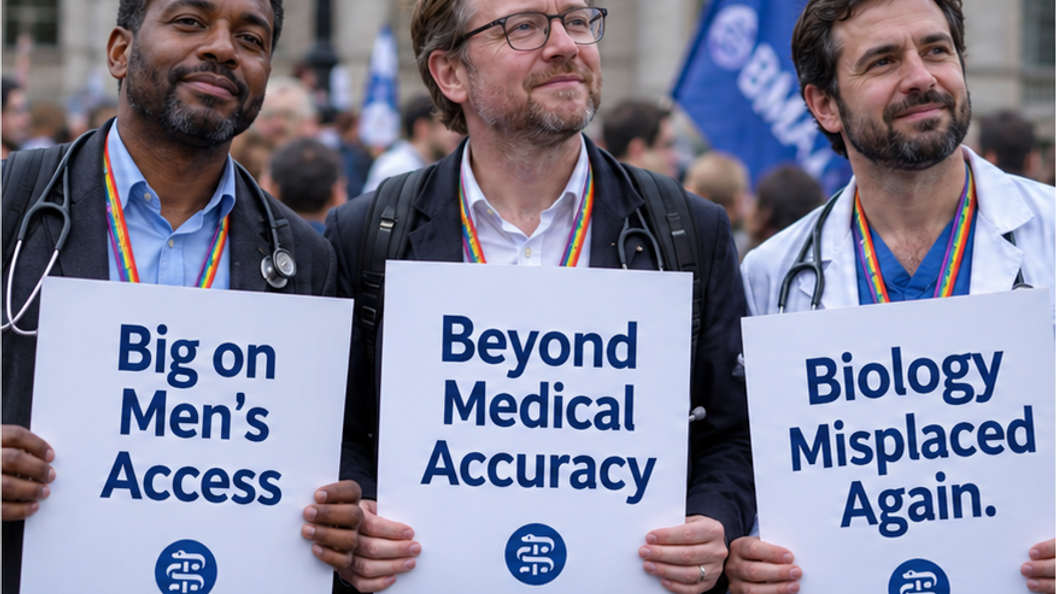
The British Medical Association is the latest union to reject the EHRC guidance on single-sex spaces, with the release yesterday of a statement expressing “deep concern” on the implications for people identifying trans and non-binary.
The UK’s premier trade union and professional body for doctors states that the guidance does not mitigate its concerns over “equitable treatment”, and alleges “potential devastating repercussions” on trans patients’ access to healthcare. The chief harm identified by the BMA include the expectation that doctors may have to reveal patients’ “gender history” – in other words, their true sex.
The BMA’s statement is only the latest sally in its relentless and longstanding alliance with the trans activist movement. Famously, in 2024 the union rejected the findings of the Cass Review, and then instigated a “witch-hunt” to identify who leaked its opposition to the media. These actions caused uproar among its members, with around 1,000 senior doctors writing an open letter expressing their “extreme disappointment” with the union’s stance.
One leading doctor, Jacky Davis, described the union’s stance as “irrational” and said that it had created a “fracture” between its leadership and the doctors it claims to represent.
This opposition forced the BMA into a swift and humiliating climbdown, with the union adopting a “neutral” position on Cass. However, this did not stop it opposing the ban on puberty blockers, just days after the High Court ruled the ban to be lawful.
The BMA’s flirtation with student union politics is not restricted to trans activism. In the same year as its disastrous intervention on Cass, doctors expressed their fear that the union’s annual meeting had become “a vehicle for Jew hatred” after a woman was heckled on stage for saying she was a practising Jew.
There is an intense irony in the timing of the BMA’s latest statement. The day before, SEEN in Health published a letter from Leeds Teaching Hospitals’ UNISON branch signalling its ‘alarm and dismay’ at NHS England guidance requiring patients to be placed in wards that align with their sex.
It also landed on the same day that JK Rowling released a new essay about how trans activism has evolved in the years since she entered the debate. In one of its most striking sections, Rowling argues that UK unions’ inability to protect their female members is because their memberships tend to have higher earnings and education. This in turn protects them from encountering the reality of trans activist demands, such as male inclusion in female spaces.
In an echo of doctors’ earlier warnings of a “fracture” between members and leadership, Rowling noted: “Union leaders these days appear to have abandoned their historic role as defenders of the working class, in favour of defending their own luxury beliefs.”
The BMA’s latest intervention in the debate does little to refute Ms Rowling’s argument.