The Pride the BBC won’t talk about
The corporation has finally asked why support for Pride is collapsing. Unfortunately, its investigation overlooks the child sex abuse convictions, financial scandals and sexualised displays that might help explain it.
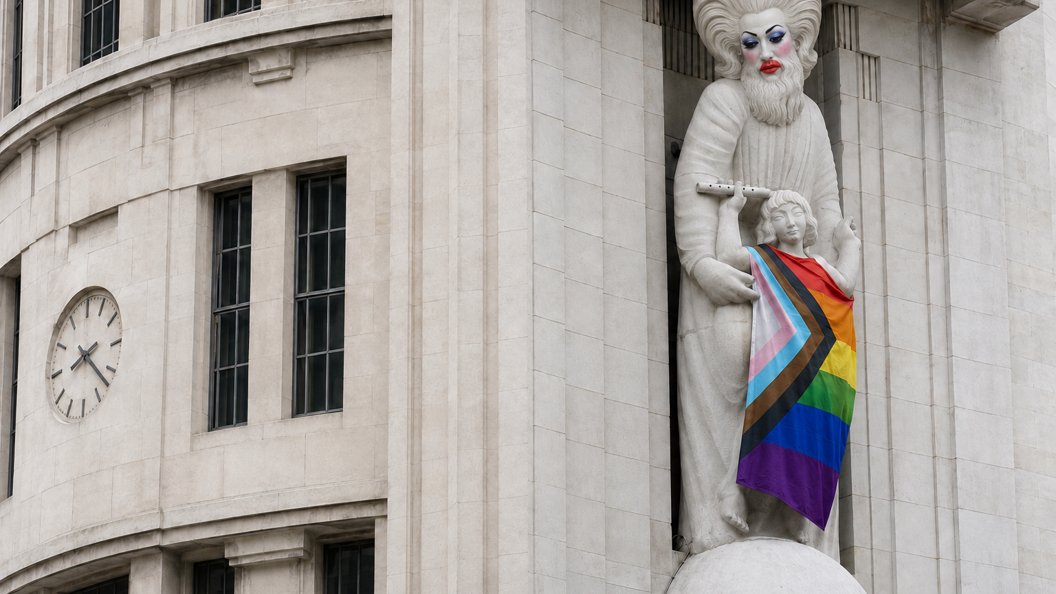
Regular readers of the BBC website might have experienced a bit of a shock this week.
So far this year, BBC News has published more than 140 articles about Pride, the vast majority of which are uncritically positive. There are numerous ‘Pride event was a success’ stories, usually fronted by a cross-dressing man, the relentless guides to Pride, which for some reason are considered ‘news’, and the ‘crowds are gathering for a Pride’ event features, which, bizarrely, often showcase the same man. There have also been several ‘this is why we need Pride’ articles, which is usually because of something as grave as a damaged sign
It was, therefore, slightly surprising to see, placed prominently on the BBC News homepage, a 2,000-word article entitled ‘Why Pride is facing a backlash – from inside and outside the LGBT community’, with an accompanying 30-minute podcast. Finally! The BBC has realised the public are sick of the displays of fetishism at Pride, as well as, of course, the numerous paedophile and financial scandals?
Er, not quite. No gender-critical person is given a meaningful opportunity to explain their objections. Instead, transvestite contributors are given the space to talk about what they don’t like about it instead.
The ‘InDepth’ feature acknowledges that some councils, other public bodies and brands have distanced themselves from Pride lately, with analysis showing that mentions of Pride on social media by the UK’s 10 biggest listed or headquartered companies have fallen by 92 per cent since 2023.
The BBC offers nine explanations: excessive commercialisation; money failing to reach LGBT causes; cynical corporate marketing; the backlash against ‘woke’; resentment of taxpayer subsidies; legal concerns among public bodies; disruption to local communities; the cost of staging large events; and, finally, the trans issue.
That final one does seem rather important. After all, some brands, such as Bud Light, saw consumer backlash after partnering with a cross-dressing man. Donald Trump’s 2024 message, ‘Kamala is for they/them. President Trump is for you’, was widely credited as one of the campaign’s most effective. It turns out that many people object to being lied to about biology, the medicalisation of children, men entering women’s spaces, compelled speech and the authoritarianism used to enforce it.
Unfortunately, none of this is considered reasons for Pride’s decline by the BBC. There’s a suggestion, instead, of a right-wing backlash, as we’re just told that Reform have recently been winning local elections and they don’t want to see Pride promoted by public bodies. That gay and lesbian people might be put off by Pride because they’re told to accept opposite sex partners is briefly and partially alluded to, but it’s immediately ‘balanced’ by the claim that ‘some trans people say they no longer feel safe attending’. The recent convictions of several Pride organisers for child sexual abuse are not mentioned at all.
That omission is less surprising when set against the BBC’s previous reporting.
When Andrew Way, the founder of Welshpool Pride, was jailed for 34 months after being caught in a paedophile hunters’ sting, the BBC reported on it, revealing his connections to Pride and even stating that he had been a drag queen in the headline. Within hours, however, the article had been edited to remove every reference to Pride and drag.
Perhaps the starkest example of the BBC’s selective coverage is Stephen Ireland. The founder and chair of Pride in Surrey was repeatedly platformed by the corporation and even hosted a BBC Radio Surrey show. Last year, he was jailed for 24 years, plus six years on extended licence, for child sexual abuse offences, including abducting, drugging and raping a child. His partner, a senior volunteer at Pride in Surrey, was jailed for 54 months for paedophile offences.
The public-interest case was overwhelming. Ireland had used his profile as a leader to embed himself in various institutions, including the police, yet the BBC’s coverage of his conviction was, at best, minimal. The story never appeared in any national format and his links with the corporation were never mentioned. Even BBC Radio Surrey just gave a few seconds to the story in its news bulletins, in which it failed to even be the top story.
Now, in an investigation purporting to explain why Pride is losing support, the BBC overlooks the scandal again. Perhaps it has had little effect on public attitudes. But if so, that may be partly because the corporation barely told its audience about it.
Nor was Ireland an isolated case. In the past 12 months, the founder of People’s Pride Southampton, an officer of Stirling Pride, the operations lead at Newbury Pride and the chair of Swindon and Wiltshire Pride have all appeared in the news in connection with child sexual abuse offences. Only the last case was reported by the BBC, and even then its coverage was minimal.
There have also been several financial scandals involving Pride in recent years. While the BBC article does reveal that ‘Manchester Pride went into voluntary liquidation last year, owing more than £1m to suppliers and performers’, it adds that ‘London Pride has faced criticism for feeling overly corporate and overcrowded; Brighton has struggled with the financial burden of staging large‑scale concerts and policing.’
What it does not mention is that Pride in London’s chief executive was sacked earlier this year after spending thousands of pounds in donated money on personal treats. Nor does it mention that Brighton Pride became the subject of a Charity Commission compliance case after more than quarter of a million pounds was given or loaned to companies linked to its former chair.
Finally, there was no mention in the article of what people can expect to see at Pride events now, and why this might be off-putting to some. Nothing about the public fetishes, the kink displays, the BDSM, the leather, the pup play, the partial nudity, the sexualised floats or signage expressing a desire for violence, usually against women. It ignores the movement’s overt politicisation too, including events at which Israeli flags have been banned while ‘Queers for Palestine’ banners are welcomed.
As SEEN in Journalism writes about the BBC article: ‘One side is humanised; the other is largely represented by a politician from a right-wing party. That is not an impartial examination of why attitudes towards Pride are changing. It is editorial framing that invites sympathy for one perspective while withholding it from the other.’
Until the BBC stops sanitising the very real problems that have turned many people - including gay and lesbian people - against modern Pride, its occasional ‘backlash’ features will remain little more than carefully managed damage control.