BBC moves the goalposts with “football homophobia” article
BBC battered for allowing trans activist journalist to talk balls about discrimination in football
BBC Sport is under fire this evening after publishing trans activism masquerading as an objective examination of homophobia in football.
The article is written by trans-identified male BBC journalist Emma Smith and uses the age-old ‘Denton’s strategy’ of using homosexuality as cover for trans demands.
Despite the BBC’s obsession with fact-checking, the 1,700-word article contains no verified evidence and relies largely on self-reported anecdotes about terrace chants, interspersed with long quotes from TQ+ organisations including Stonewall and Sports Media LGBT+.
In lieu of facts or testimonies, the article relies heavily on a recent analysis of ‘hate incidents’ reported to the Kick It Out campaign. This includes the risible claim that the Supreme Court ruling on the definition of sex, together with the FA’s ban on men playing women’s football, led to “a spike in transphobic abuse.” No evidence whatsoever is offered in support of this assertion.
Although the article begins with a trigger warning about “offensive language”, the only example given is the ‘rentboy’ chant directed against Chelsea supporters, which dates back to the 1980s. Nor is the author able to document a single example of a ‘transphobic chant’.
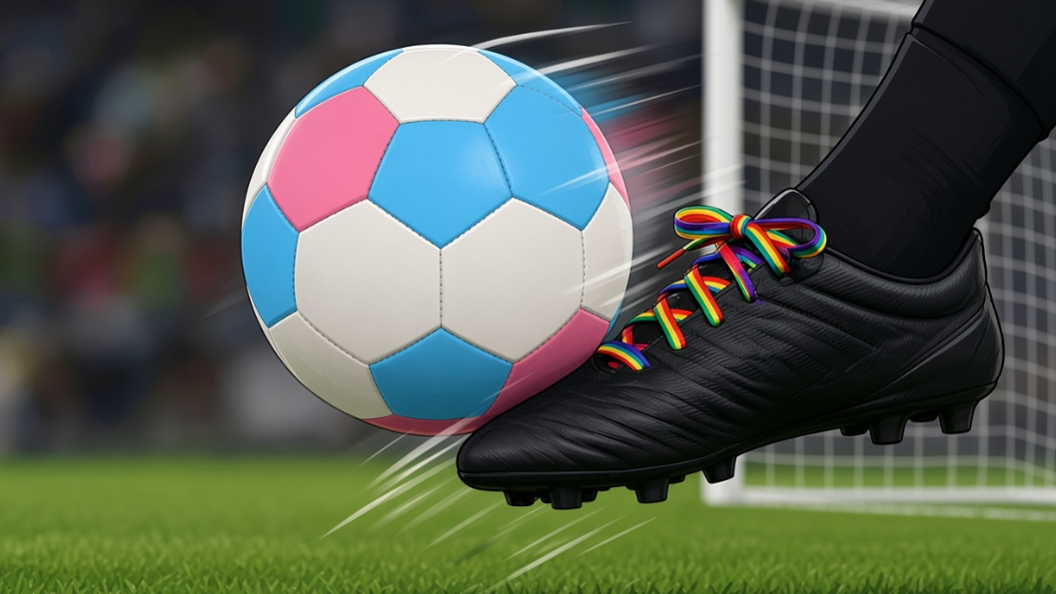
Much space is given to Stonewall’s Rainbow Laces campaign. Jon Holmes, founder of Sports Media LGBT, says club media departments have become more risk-averse amid growing toxicity on social media. He says the idea that players were forced to engage has been misconstrued.
This stands in direct contradiction to the BBC’s contemporary reporting of the end of Rainbow Laces in 2024, in which FA consultant Liz Ward described the pressure on players to wear Pride symbols. “When people feel as though they are being ‘told’ to do something, as opposed to really understanding ‘why’ they’re doing something, conflict will arise,” she explained.
“[Players] are being told to wear laces, an armband or a warm-up top because they ‘have to’. I’ve seen players be told that it’s part of their contract, threatened with a breach if they don’t take part.”
Smith’s article, by contrast, contains absolutely no analysis of why people might be pushing back against LGBTQ+ initiatives. This should not surprise us: Smith is a man with a passion for participating in women’s football. According to his Bluesky profile, he is currently a goalkeeper coach for Manchester Laces, “the UK’s top inclusive football community for women and non-binary individuals.”
As TERF Times readers know, the BBC is incapable of exercising good judgement when it comes to men in dresses. When Smith joined the Corporation, he was profiled in a fawning “stunning and brave” article. It was not long before he started posting photos of himself taken in the ladies’ loos at Media City Salford.
The fish rots from the head, as the old saying goes. The real aberration is not Emma Smith, but its transactivist Director of Sport, Alex Kay-Jelski. In a 2019 column for The Times, before his appointment to his current £290,000-a-year role, he compared defenders of women’s sport to racists. He also claimed that athletes who spoke out about male participation, such as Martina Navratilova and Sharron Davies, were “not experts”.
Kay-Jelski was in the news yet again this week, after Sharron (now Baroness) Davies criticised him for the BBC’s relentless focus on football to the exclusion of other sports and trying to turn the BBC into a ‘groovy Netflix’.
The editorial failure to publish 1,700 words of activist drivel on BBC Sport, a service reaching nearly 18.4 million people a week across online, TV and radio, heaps further pressure on Kay-Jelski. But this being the BBC, don’t expect accountability or an apology, much less a resignation.